
What Is Strategic Sourcing — And Why Industrial Fabric Buyers Can’t Afford to Ignore It
Updated: Jul 2
Stop Guessing, Start Sourcing: How Strategic Sourcing Gives Industrial Fabric Buyers a Competitive Edge
If you buy industrial fabrics — woven polypropylene shade fabric, HDPE knit, vinyl coated polyester mesh, truck cover fabric, containment fabric, insect netting, frost protection fabric, or privacy screen fabric — you’ve likely felt some familiar pain points: prices that change without warning, suppliers who overpromise and underdeliver, shipments held up at customs, a product that performs differently this year than it did last year, specifications that are incomplete or wrong.
The difference between businesses that navigate these challenges and those that get stuck in them usually comes down to one thing: how intentionally they source.
This post breaks down the core concepts behind strategic sourcing so you can start applying them to your own purchasing decisions. If you want to see exactly how a managed sourcing process works in practice, read our follow-up post: How Acadian Industrial Textiles Sources Smarter — and How We Can Do It for You.
Three Concepts Every Industrial Fabric Buyer Should Know

Strategic Sourcing
Strategic Sourcing is a continuous approach to deciding what to buy, from whom, and under what cost, terms, and risk. It’s not a one-time vendor selection — it’s an ongoing discipline that maximizes efficiency and drives down product cost over time, while protecting you from the surprises that catch reactive buyers off guard.
For buyers sourcing polypropylene, HDPE, or technical specialty fabrics globally, the difference between a reactive and a strategic approach can be tens of thousands of dollars per year.
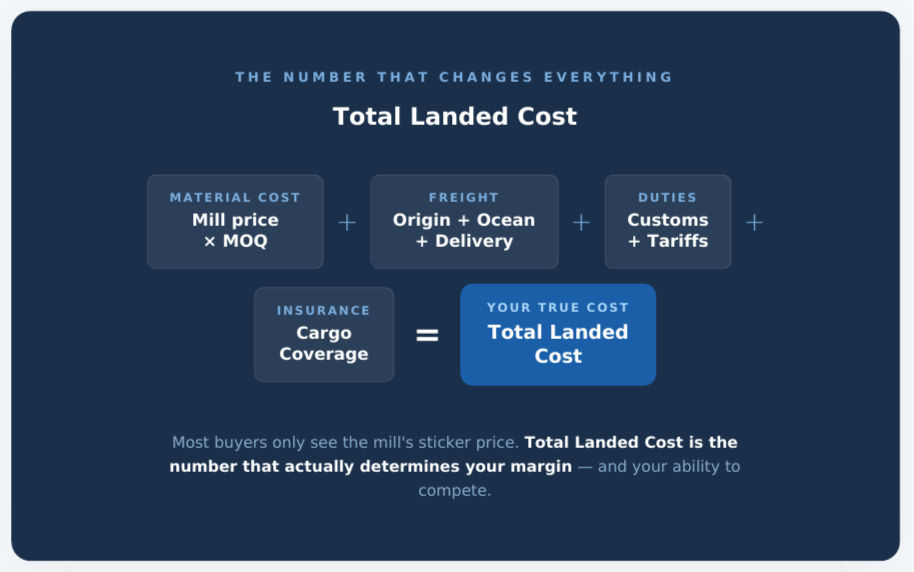
Total Landed Cost
Total Landed Cost is the true cost of getting goods into your warehouse — far beyond the price on a purchase order. For industrial and technical fabrics sourced globally, it includes every dollar between the mill and your dock:
Total Landed Cost = material cost × minimum order quantities (MOQ) + freight (origin, ocean & delivery) + duties + insurance + surcharges + delays
Understanding this number lets you set the right price, make confident sourcing decisions, and solve cost problems for your customers before they become your problems.
Supply Chain Risk Management / Strategic Sourcing
Supply Chain Risk Management is the discipline of avoiding problems caused by over-reliance on a single supplier or region. For buyers of polypropylene woven fabric, knitted HDPE, vinyl coated polyester, or agricultural fabrics, it means asking the uncomfortable questions before a crisis forces them. What happens if this mill closes? What if tariffs spike on fabric imports or you don’t know what they are? What if a geopolitical event disrupts shipping? Businesses with a risk management mindset sleep better. Those without one tend to find out why they should have had one.
Is Now the Right Time to Source More Strategically?
Here are the situations that typically signal it’s time to take a harder look at your sourcing approach:
Global events are disrupting your supply of polypropylene fabric, HDPE materials, or vinyl coated polyester raw rolls or finished goods
You’re unhappy with your current fabric supplier on price, quality, or delivery
You want to understand what the performance tests on your technical fabrics actually mean — and whether you need third-party validation
You’re ready to move away from multiple costly last-minute purchases to the advantages of aggregated buys
You need a backup supplier for truck cover fabric, shade cloth, containment fabric, or insect netting but aren’t sure of the best approach
Your legacy fabric supplier knows more about your own product than you do
You need product innovation — from tweaks to a major redesign — and maybe the supplier already has the specs
You want to import polypropylene or polyester fabric directly but struggle with managing quality, supplier relationships, technical collaboration, or the cash advance outlay of full container MOQs. Or don’t ant the risk of a full container of a new or trial product
You want the cost advantages of buying container loads without dealing with carriers, duties, drayage, detention, and demurrage yourself.
You are interested in a “Fractional Container”, but lack a partner to share it with.
Strategic sourcing isn’t just for large corporations with full procurement teams. Any industrial fabric buyer making regular purchasing decisions can apply these principles — and the upside is significant.
If you’d like to see how a professional, step-by-step strategic sourcing engagement actually works — from supply market analysis through ongoing supply management — read How Acadian Industrial Textiles Sources Smarter. We offer this as a fully managed service for industrial fabric buyers who want results without the overhead of building an in-house sourcing function.
Ready to put these principles to work for your business? Acadian Industrial Textiles offers strategic sourcing as a fully managed service — bringing over two decades of industrial fabric expertise to buyers who want results without the overhead of building an in-house sourcing function. Contact Acadian Industrial Textiles to start the conversation.
Comments